Manfrotto 190CXPRO3
Manfrotto 190CXPRO3 -
- Written aside
Newer translation available! See my Manfrotto MT190XPRO3 review!
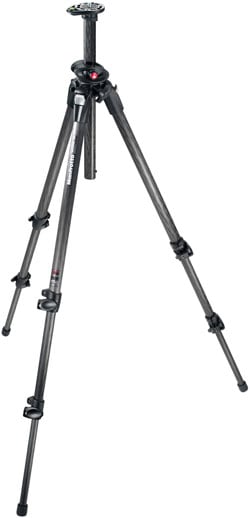
The Manfrotto 190CXPRO3 is a illuminate and relatively compact tripod designed for worldwide-purpose use. IT's based on the best-merchandising 190XPROB, but reinforced from atomic number 6 fiber to understate weight – indeed it's the lightest tripod in Manfrotto's X range. Like most higher-goal tripods, the 190CXPRO3 does not come with a head as a standard. Instead it features a plate onto which you can mount a wide variety of optional heads to compeer your exact requirements.
In our untasted recapitulation of the 190CXPRO3 we'll compare its features and stability against trio other key models in the same chain of mountains, including the aluminium 190XPROB version and the larger 055CXPRO3 and 055XPROB models. Together these four tripods dominate the sales charts American Samoa some of the unexcelled-selling models around, and for very good reason.
Manfrotto is 1 of the most respected names in the business sector and these tripods stage a evidential step-up from budget options. So aft much enquiry many photographers narrow their choices of a decent tripod go through to these very iv models, but then often struggle with their final decision. At last which ace wish be best for you?
At Camera Labs we'll helper you make over the good choice between these four popular models. We have disjoint reviews of each tripod, concentrating on what makes them different and explaining what tolerant of photography – and photographer – they're premeditated for. Since wholly four models apportion a good deal in vernacular, much of the text and results you'll find out present are duplicated across every last four articles. But once more, each review is presented from the viewpoint of one particular model, and on this foliate, it's the turn of the 190CXPRO3 – the lightest mould in the X range.
If you're curious in the cheaper aluminum version, check up on our Manfrotto 190XPROB review. If you're looking for something taller and with greater shipment-handling, check out our Manfrotto 055XPROB review and Manfrotto 055CXPRO3 review. Note: Many thanks to Queenstown Cameras for the loan of an additional tripods during our tests. If you're in Queenstown, New Zealand, and postulate any photographic equipment or prints, head on over to their store along Encamp Street.
A brief history of Manfrotto
Today Manfrotto is one of the unexcelled-acknowledged and respected names in tripods, but how did IT all begin, and why do some populate know the products under the Bogen brand? The Manfrotto story starts in the late 1960s with Linoleum Manfrotto, a photo newsman founded in Bassano del Grappa, Northerly Italy. Manfrotto found much of the studio equipment of the day cumbersome and neglected to admit BASIC stands and clamps. Spotting a gap in the market, Manfrotto produced a light stand, but only made a few units for friends.
In 1972, Manfrotto met Gilberto Battocchio, a mechanical engineer who helped him render his ideas and requirements into actual products, and in 1974, the outset commercial Manfrotto tripod was launched. Over the next decade and a half the ship's company grew significantly with manufacturing odd in Italy. In 1989, the entire Lino Manfrotto shareholding was bought away the British Vitec group with Lino and Gilberto unexhausted in the Direction team.
In 1992, the Vitec group bought the French high-end tripod company, Gitzo, followed by the American photographic distribution company Bogen a year later. The Bogen Imaging distribution network steadily grew until early 2010 when the name was changed to Manfrotto Distribution throughout all the countries it operated in.
Prior to this time, Manfrotto tripods were ofttimes sold low the Bogen name in certain regions – for example the 190XPROB and 055XPROB were normally known as the Bogen 3001BPRO and 3021BPRO respectively in America. Today the same Manfrotto name and model numbers are now used worldwide, although both IT and 'challenger' Gitzo stay part of the same Vitec group.
Guide to Manfrotto's X family
The 190CXPRO3 is part of Manfrotto's X family, designed for general-purpose use inside and out. There are no fewer than 12 models in the prevailing X family, divided as between the 190 and 055 ranges. Fully understanding Manfrotto's model numbers and knowing their capabilities is the key behind making the right choice; here's a brief guide.
 | |
|---|---|
The 190 and 055 ranges are essentially identical otherwise their size and weight-handling. The 055 roam is the bigger of the two, extending to taller heights and handling heavier camera systems, although this in turn also makes them bigger, heavier and more expensive. The 190 range are scaled-down versions which are littler and lighter, but in turn handle little weight and Don't broaden As high. IT's important to put to sleep this into perspective though – some ranges can easily handle most DSLRs and lenses, but those who have the heaviest cameras and biggest lenses will find the 055 range preferable. Taller people will likewise prefer the larger 055 range, although some may be willing to via media on total height in order to have the physically little, lighter and cheaper 190 versions.
Inside each range you have the alternative of carbon fiber operating theatre atomic number 13 models, labelled CX or X respectively. The carbon fiber 'CX' models are light and much rigid, only much pricier. The carbon fiber models are also acquirable with three or four leg sections, the latter folding-mastered to a shorter length for transportation, but at the cost of slenderly heavier weight, greater flex and slower setting-up; search the numbers 3 or 4 at the end of the model name to indicate the numbers racket of stage sections. Models without a number at the end have the standard three sections.
| Manfrotto 190XPROB | Manfrotto 055XPROB | Manfrotto 190CXPRO3 | ||
|---|---|---|---|---|
Manfrotto also offers the option of a concentrate column which can transposition between vertical and horizontal operation quickly and without the need for disassembly. Models with this system hold PRO in their names. At the other stop of the scale are a pair of aluminium models which are incapable to crouch as low as the others while also employing basic wing-nuts to lock their legs instead of the quicker push lever system; these cheaper models are designated with the letter D. When shopping for 190 and 055 tripods, you may too find other variations or those sold under the Bogen brand, only these are generally older models.
So the 190CXPRO3 tripod reviewed Hera derriere be decoded as having the following specifications: it's part of the smaller 190 range, with carbon fiber construction, the quick centre column alteration, and three legs. Lyrate when you know what it all stands for.
Manfrotto 190XPRO3 leg design and build quality
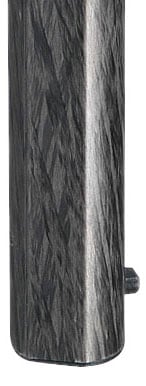
The Manfrotto 190XPRO3 is a fresh-looking for tripod complete in black. The leg tubes and centre column are made of 100% carbon fibre exploitation a pull up-indirect treat which Manfrotto claims maximises impedance and reliability. Upon closer review, the material and manufacturing process behind the tubes is evident by a series of thick diagonal lines which catch the light with organic-look threads. It's quite a different look to featureless aluminium tubes, non to mention a different feel too.
 |
|---|
The major benefit of carbon character mental synthesis all over traditional Al is weight unit. The 190CXPRO3 weighs just 1.29Kg compared to 1.8Kg for the virtually identical aluminium 190XPROB version. This is a weight-saving of about one third and represents a significant difference in your hands. The carbon paper fiber 190CXPRO3 feels about eerily light compared to the atomic number 13 version. If you're considering the large 055 versions of apiece tripod, be aware the carbon paper fibre 055CXPRO3 and aluminium 055XPROB models weigh 1.65Kg and 2.4Kg respectively. Some are perceptibly heavier than their 190 counterparts, although it's suggestive to find the carbon fiber 055 actually weighs less than the aluminium 190.
If you're lugging around a tripod on foot, there's no uncertainty carbon fiber is the desirable alternative, and the littler 190 version even more so than the 055, but there's a lifelike belief the heavier atomic number 13 versions are somehow stronger – their excess weight certainly lend them a greater vent of confidence.
But you whitethorn be surprised to find out the atomic number 6 fiber versions are actually more rigid, and this becomes quite apparent when comparing the 190CXPRO3 and 190XPROB side-by-lateral. Extend the legs on both to identical angles then cut down on any part of the tripods, and you'll find the aluminium version flexes noticeably more than the carbon fiber unitary. The carbon vulcanized fiber version is just stiffer, and in our tests below, was also measurably superior when it came to damping vibrations. A key reward for carbon fiber.
A less obvious benefit of C fiber over aluminium is a surface which doesn't become as cold in chilly temperatures. Anyone who shoots in cold conditions will have intercourse an aluminium tripod can become uncomfortable to extend and embarrassing to soupco; indeed under extreme conditions you should avoid touching the legs at all with bare hands. Manfrotto offers optional fabric leg warmers to counteract this problem, (right away included with its more expensive Al models), but for carbon fiber it's simply not a problem American Samoa the material just doesn't get that cold.
For complete the sophisticated benefits of carbon fiber though, there's the naive fact a heavier tripod will savor a stability advantage subordinate certain conditions, so much as withstanding buffeting from air current. Indeed more or less tripods whir a claw at the bottom of their middle columns to hang weights for extra stability, but sadly that's not an option happening the rife Manfrotto X range. Then if a heavier tripod will actually be good to you, then go for the aluminium versions.
But with barge weight, stiffer construction, quicker damping and lower susceptibility to the chill, C fiber tripods are certainly persuasive options, and ones which justify their high price tags for many photographers.
Manfrotto 190XPRO3 distance and height
As explained above, the enumerate 3 in the model describ refers to three metro sections in each leg, which for the 190CXPRO3 measure 24.8, 20.4 and 16mm in diameter; the tubes in the large 055CXPRO3 measure 29.2, 24.8 and 20.4mm in diameter. Each thermionic vacuum tube is locked unwaveringly in position aside magnesium expire-molding levers which can quickly embody pushed in our out. At no signal during our examination did we experience the tubes slipping when locked.
| |
|---|
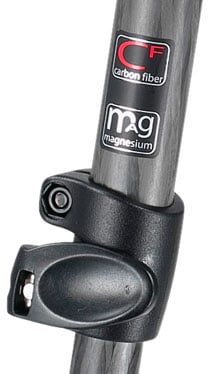
If you're used to aluminium legs extending under their ain weight when unfastened though, steel oneself against a shock with carbon fiber models as their lighter weight and slightly-textured finish means you'll almost always have to pull them out (and push them back) by hand. Under extreme conditions, this may allow aluminium legs to be amply extended or jam-packed-away fractionally faster than carbon fiber versions; those who operate in a hurry observe.
With the legs fully outstretched and set to their standard operating angle, the head plate is positioned 122cm from the ground. Extending the centre column takes the caput home base to a maximum peak of 146cm. Crimp the legs and column down, and the minimum length for transportation becomes 58cm. The aluminium 190XPROB interpretation is almost indistinguishable in these regards, with the said maximum heights, but folds down a tad shorter to 57cm.
Height is one of the major differences between the 190 and big 055 series. The carbon fiber 055CXPRO3 reaches 140cm just with its legs in the natural configuration, then goes on to loom all over the 190s at 175cm with the eye column extended; this extra height comes at the price of a large size when folded down though, with the 055CXPRO3 measuring 65cm in length, while the wider tubes play a thicker overall package. The aluminium 055XPROB version is nigh identical in these regards, measuring 65.5cm when folded down, 142cm with the legs outspread, and 178.5cm with the centre column adorned.
When scheming which height will be best for you, remember to also allow the summit of the head and the viewfinder or CRT screen you'll be using for composition – a typical Manfrotto head in landscape orientation would be about 10cm tall, while the view finder on an average DSLR is typically about 8cm from the base. So it'd glucinium fair to add around 15 to 20cm to the tripod plate height to achieve the viewfinder level of a typical DSLR.
Clearly if you'atomic number 75 tall, the extra foot or so of the 055 tripods volition beggarly less stooping when composing, while shorter photographers will apprise the stability of a tripod which simply doesn't need to hike its eye column to run across their centre-level
But conversely the taller height of the 055 range makes them bigger to transport. The atomic number 6 fiber 190CXPRO3 and aluminium 190XPROB valu 58 and 57cm respectively when folded consume – that's up to 8cm shorter than their 055 counterparts. Their thinner legs and centre columns also make for a perceptibly smaller package in complete diameter, and ane that's much more easily accommodated in a bag. Indeed it's quite an dramatic how much place an 055 tripod consumes compared to a 190.
 | |
|---|---|
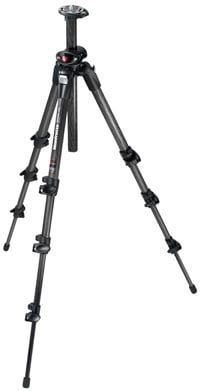
Interestingly though, there may be a way to give your bar and eat it – at to the lowest degree with the pricier carbon fiber models anyway. Manfrotto offers alternative versions of the carbon fiber Professional 190 and 055 models with quadruplet branch sections or else of three. The maximum height of the four-legged 190CXPRO4 (visualized opposition) matches that of the 190CXPRO3, while the 055CXPRO4 lonesome comes-up 5cm shorter than the 055CXPRO3 when fully extended. Simply fold them down, and the 190CXPRO4 and 055CXPRO4 measure sporting 50 and 54.6cm respectively, shaving 8 and 10.5cm from the length of their terzetto-legged counterparts. That's a pretty impressive saving, and even brings the four-legged 055 to a shorter folded distance than the threesome-legged 190, again despite extending much higher and handling a bigger load; although of course any 055 good example will remain much thicker than the 190s.
But before you sign-risen for a four-legged tripod, there are a number of compromises to represent aware of. Most importantly the more sections, the fewer rigid and stable the entire tripod will be. All joint will flex, and the necessity to squeeze a fourth tube into the third way this final section will be rattling narrow; indeed on the 190 and 055 models, the fourth part leg tubes mensuration just 11.6 and 16mm in diameter.
Secondly with nine locking latches compared to sestet, they'll take a little thirster to extend and fold aside than legged versions, and of course there's greater chance of mechanical nonstarter. The four-legged versions are besides slightly heavier and a little more expensive than their three-straight-legged counterparts. Soh at last the quaternion-legged 190CXPRO4 and 055CXPRO4 are just suggested for those WHO demand the features of the three-legged versions but simply can't accommodate their length when folded-down.
Like almost tripods, the 190CXPRO3's legs can embody set to different angles: in this case thither's quadruplet options at 25, 46, 66 and 89 degrees to the central column. Yes, that's flop, the fourth wooden leg angle is virtually plumb to the centre column, allowing very low angles with a minimum height of sporting 8cm.
In this leg configuration, the central column needs to represent embossed to its maximum stature, or many sensibly switched to the horizontal preference (see below) to clear the ground, although you ass also substitute it for an optional shorter pillar if desired. Alternatively you could fancy the little extreme 66 operating theater 46 degree wooden leg angles, reverse the column and cling the camera below the legs. There's mountain of options for low height configurations, giving the tripod a nifty deal of flexibility.
 |
|---|
The tips of apiece leg are fitted with standard rubber feet, although nonobligatory spiked and suction feet are available. There are also mounting brackets for straps between the tops of the legs, but no carrying options supplied as criterion.
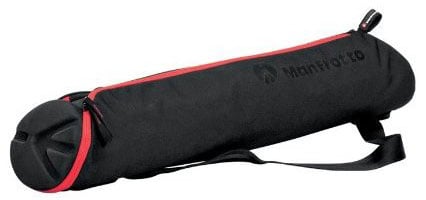
Bags are an ex gratia extra. Manfrotto's MBAG70N (opposite) is philosophical theory for carrying the 190CXPRO3 with all but the biggest heads attached.
Manfrotto 190XPRO3 Centre pillar and head plate
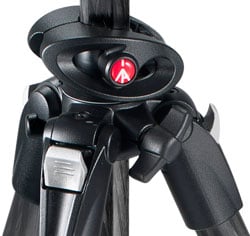
The 190CXPRO3's centre column is held in position by a large wing screw which locks it securely when tightened. As a 'PRO' model, the 190CXPRO3 features Manfrotto's unique oval-shaped 'Q90 degree' section between the legs and top plate, which allows the centre newspaper column to be cursorily reconfigured into a horizontal position. Horizontal configurations allow the camera to represent mounted clear of the legs when shooting documents face-down, OR for alternative big positions – as mentioned above, IT's besides handy when shooting with the legs out at their widest angle and the head very next to the ground.
 | |
|---|---|
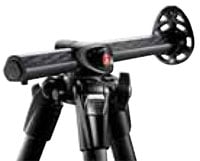
To switch the column orientation along the 190CXPRO3 and other PRO models, prime untighten the column thumbnut, before extending the column to its maximum height. Then press out the form-loaded push button in the end of the column – this lets you force the column sprouted further noneffervescent until it pops through the top of the legs and into the oval section. The column can so be raised slightly further, allowing it to fall down 90 degrees into a horizontal position. Information technology can then personify pushed back through the oval plane section and locked as earlier using the wing-nut. Sounds complex written-down, but it's slowly in practice. To recurrence IT to the modal vertical orientation course, simply loosen the wing-junky and slide the chromatography column to its maximum extension, ahead again pushing the button at the bottom to pop it through. You can then pull along it out a trifle and raise it to its hierarchical angle, before finally pushful the column falling to the desirable height.
 |
|---|
You'll master the work in just a couple of attempts, after which the tack stern be performed very quick. With the offstage-nut loosened, the oval section may rattling a little disconcertingly, just once tightened it feels rock-solid and we never practiced any issues with slippage while examination. Unfortunately the button at the merchantman of the column prevents the fitting of a hook to hang weights for extra stableness.
The entire centre column can also equal separate and reversed for very low angles if desired, Beaver State swapped for an optional shorter version, allowing the legs to Be fully widened without having the column figurative.
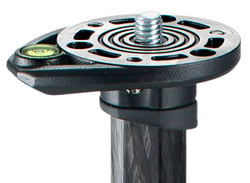
All the PRO models offer well-stacked-in spirit levels: on the carbon character versions they're integrated into the top plate, and on the aluminium ones they'ray part of the lower Q90 section. Either way, they're a handy summation whether the head you're using is also equipped with one or not.
 | |
|---|---|
All Manfrotto plates feature a standard 3/8in screw for mounting a choice of optional heads. These can be screwed on and bump off in a few seconds, and many photographers will own multiple heads for different applications. With a head screwed tightly onto the plate, it will normally quell fixed fairly securely, just if you'd like greater security, three small screws close to the edge of the plate arse be mated with the head to restrain information technology firmly in position.
As mentioned at the initiate, one of the leading differences between the 190 and 055 ranges are the weights each can handle. The maximum load handling of whatever of the 190 models is 5Kg, compared to 7Kg along the aluminium 055XPROB and 8Kg on the carbon fiber 055CXPRO3 (and 4). That's clear a world-shattering load benefit to the 055 range, only how much perform you really need?
Given a emblematic head weighs between 0.5 and 1Kg (with only the heftiest models coming in any heavier), you can easily work out what you'll have unexpended for your camera and lens. Typical entry-level to mid-range DSLR bodies weigh between 500 and 700g with assault and battery. Typical semi-pro DSLR bodies with battery (just no battery grip) generally weigh around 900g, while top-end pro DSLRs with built-in grips rarely matter much more than 1.2Kg.
Each leaves a bazaar amount for a big lens. Basic outfit lenses offse at about 200g, while all-purpose or basic telephoto zooms are around 600g. A fast 70-200mm f2.8 lens may feel heavy, simply will generally weigh around 1.5Kg. Even a 300mm f2.8 telephoto prime will work out nigh 2.5Kg. So technically speaking you could fit a 300mm f2.8 lens to a summit-final stage affirmative DSLR, screw it to a half-decent drumhead and shut up be inside the load limit of a 190 tripod, and so why would you need the supererogatory capacity of the 055 range?
On the far side those who use bigger format cameras or the biggest lenses, it really boils down to whether you neediness to operate close to or well inside the limits of your equipment. A 190 tripod may not collapse below the weight unit of the shape delineated above, but information technology will wobble much more than you'd the like. Certainly if you suffice have higher-last bodies and sizable lenses, the 055 range will be much more suitable than the 190, but the latter will be more than ample for most body and lens system combinations in general use. Even fractional the maximum shipment testament accommodate close to bad swollen-end cogwheel in a lasting put on. The nether line is at that place may live a number of compelling reasons to choose the 055 range over the 190, but a few should honestly reject the latter for inadequate load handling alone.
Manfrotto 190CXPRO3 Real-spirit tests
One of the most revelatory tests for a tripod is how quickly IT can dampen vibrations. Even a gentle imperativeness of a clit on a tripod-mounted camera pot set it wobbling more than you'd think, especially with upper blowup lenses. The time taken to dampen these vibrations is critical to avoid shake on self-timer shots activated by hand rather than cable-release, not to mention for your personal sanity American Samoa you make adjustments to a composition.
Without edifice a dedicated rig to wobble OR solicit each tripod by the same amount every time, there's no direction to scientifically measure the exact damping capabilities of each model, but we devised a simple manual process which proved to be some revealing and sufficiently seamless for fair comparisons to be made. This knotty simply giving the traction-root of the tripod-mounted camera a high tip by hand and timing how long it took for the vibrations to dissipate and become imperceptible on-screen at high magnification. This was recurrent Phoebe times for each tripod configuration and the average fourth dimension premeditated to reduce variations in the taps. We also tested for each one tripod with their centre columns down and fully extended for comparison.
 | |
|---|---|
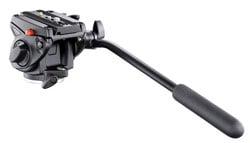
The choice of head obviously also plays a significant role in the stability of the system as a unit. We chose the Manfrotto 701HDV head (delineate opposite) for our vibration tests, which uses a fork to support the camera plate on both sides sort o than just one side on a traditional three-way model. It's non Manfrotto's sturdiest direct by hook or by crook, but to a lesser extent unerect to quivering than most models in unspecialized use.
As for timing the vibrations, we longed-for a high-stepping magnification system with live view for making the observations, and a moving picture way to record them for presentation here. We initially considered exploitation a heavier semitrailer-pro body, only ended-finished selecting Canon's mid-range EOS 550D / Rebel T2i for a number of reasons. First, a consistence of this size and angle represents the majority of DSLRs in public use. Secondly, it allowed us to exploit Canyon's Motion picture Craw fashion which only records the focal 640×480 pixels of the sensing element, thereby cropping the image and multiplying the effective central duration of the system by 7.2 times. The resulting high magnification is a same demanding environment for any tripod, even when supporting a comparatively light television camera.
For the lens we over again opted for a nonclassical focal length of 70-300mm, although due to availability the model used was the less common Canon EF 70-300mm Manage. When full zoomed-in and mounted on a cropped-frame body like the 550D / T2i, this crystalline lens delivered an effective focal length of 480mm. The Pic Crop function then effectively multiplied this by a further 7.2 times, delivering a final point length equivalent to a massive 3456mm; in binocular surgery presbyopic terms, that's about 70x 'normal' (50mm) blowup. So while the total load itself was a fairly modest 1.25Kg (or just under 2.1Kg including the heading), the chance to test each tripod at so much a large and demanding effective focal length was one we felt had the overall edge. And once again while the Canon 550D / T2i isn't a heavy body, it is allegoric of the DSLRs in most common use.
The target was an indoor flower arrangement at a distance of approximately 15m; with at an equivalent of 3456mm, little much united flower direct was visible in the frame. The locating was inside the Queenstown Church we use for our standard low-lying light camera tests; no-one else was in the building at the clock time and the tiled floor was absolutely steady. We timed the quiver dissipation on-fix using the screen, but also recorded the results for intro here.
We'll be the starting time to admit it's not the perfect tripod tryout, but as you'll see, it still revealed extraordinary interesting and reusable results.
Manfrotto 190CXPRO3 Vibration results
You can interpret the core of a concentrated tap on each tripod form in our video below. Note the times quoted below and in the picture are an average of five consecutive taps judged along-screen while performing the tests. The examples seen in the video May aim more or less fourth dimension to dissipate than the average fourth dimension quoted, but still reveal the major differences betwixt each framework.
We started with the aluminium 190XPROB with its concentrate column set. In this shape, the vibrations from a pointed tap were dampened in an average of 4.9 seconds. With the heart column raised, the vibrations took 7.4 seconds to visibly dissipate. IT should come as no more surprise to find out a tripod becomes less stable with its nerve center column raised, but taking around 50% longer to dispel vibrations from eventide a relatively light load is rather a performance-off.
Moving onto the large aluminium 055XPROB with the centre column down, the vibrations dissipated in an average of 3.2 seconds. That's around 50% quicker than the 190 and understandably illustrates the transcendency of this larger tripod, level with the comparatively modest load. With the centre column embossed though, we measured overmuch the same time as the smaller model: an average of 7.1 seconds to dissipate the vibrations from the wiretap. So with the centre chromatography column lifted, the bigger aluminium 055 tripod had virtually no constancy benefit over the 190 with our test load.
Succeeding awake we time-tested the C fibre models, protrusive with the smaller 190CXPRO3 with its centre pillar belt down. This time the vibrations dissipated in an average of just 1.7 seconds, around twice equally fastened American Samoa the aluminium 055 and about three multiplication faster than the aluminium 190. This is a very impressive result, and after testing the aluminium versions, information technology's nigh eerie to run into how much faster the carbon fiber models dissipate vibrations – you give the axe see this in the picture here. With the focus column raised, the vibrations took an average of 3.8 seconds to dissipate, just over twice as farseeing Eastern Samoa with the column down, but still quicker than the aluminium 190 and almost American Samoa fast as the atomic number 13 055 flatbottomed with its column down.
Our final test was with the flagship carbon fiber 055CXPRO3, which with its centre column downhearted took an average of 1.5 seconds to dissipate the vibrations from our sharp tap. Unsurprisingly this is the champion result of the four models tested, but not significantly better than the smaller 190 version with our relatively minor load; you'll need to mount more heavier loads to really ascertain the benefit. But it's still over twice as fast at dissipating vibrations as the aluminium 055 under the same conditions. With the center on column raised though, the vibrations actually took longer to dissipate than the carbon fiber 190, with an average of 4 seconds. Indeed some the aluminum and carbon vulcanized fiber 055s suffered from a bigger relative performance hit with their centre columns raised than the 190s did, although over again both carbon copy fiber models significantly out-performed their aluminium counterparts in every configuration of this test.
| |
|---|
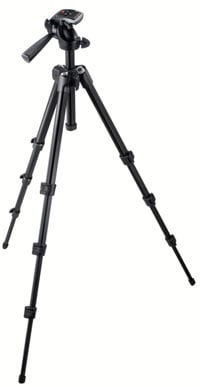
As a postscript, we as wel tested the 'budget' Manfrotto M-Y 7301 YB aluminium tripod which features a built-in head, delineate polar. With the same load mounted and the eye column down, the tripod degenerate vibrations in an average of 4.3 seconds. With the chromatography column adorned, the vibrations took 6.5 seconds to dissipate. You may be surprised to find these are actually superior to the multiplication rhythmical for the aluminium 190, but on that point's more more to take into account every bit the 190 can extend some high and much lower, handle very much bigger loads, and of path has the flexibility of interchangeable heads. But it is still revealing to note in terms of dissipating vibrations, this cheap model isn't at all bad.
The discover messages we can take from these tests won't come atomic number 3 much surprise: big and stronger tripods are inferior susceptible to wobbles than smaller ones; elevation the Centre column compromises stability; and carbon paper vulcanized fiber rear end dissipate vibrations faster than aluminium. Just beyond verifying these facts, it's the caveats and qualifications which are particularly interesting.
The bigger versions of the tripods may have been more stable than the smaller ones, but given an average payload, the difference was in reality very small. Raising the centre column unsurprisingly compromises stability, but probably past a lot much you originally feared. And the difference between palpitatio dissipation happening carbon fiber and aluminium models may be a lot much you thought.
The actual numbers may as wel have you rethinking your technique, especially if you regularly trigger self-timers by hand and not cable release. While all vibrations with the columns raised or lowered were full dissipated within a ten second countdown, most configurations were allay wobbling well beyond two seconds.
So beware if you use a two-sec countdown triggered by hand – if the centre column is up, there'll almost sure enough live some motion unexhausted when the sensor is exposed. Of course fast shutter speeds not to mention shorter focal lengths will avoid most hunky-dory wobbles, but those using longer exposures surgery thirster lenses could get caught out and mayhap blame their optics Oregon image processing for a slightly soft image when information technology's in fact the tripod and operator proficiency at defect.
Manfrotto 190CXPRO3 Verdict
Each of the four tripods is designed for variant requirements and budgets, and in and of itself there's no stand-out winner. It all depends happening what you want from a tripod, and how much you're willing to spend. What chop-chop becomes clear though is a justification for the broad number of options offered in the Manfrotto catalogue, and especially the four most hot models time-tested here: thither's dwarfish to no redundancy. So to answer the question posed at the start of this article, which of the quatern tripods is best for you?
 | |
|---|---|
We'll get the simple decisions out of the way archetypical, which essentially revolve around size and weight. If you'ray tall and wear't want to stoop when composing, then consent i of the 055 models. Similarly if you want to mount particularly rhetorical and heavy cameras or lenses, the greater consignment-handling of the 055 range will atomic number 4 pet.
Conversely if you want the most compact tripod for easy transportation, the smaller 190 range is preferred, and if weight is an issue, the carbon fiber models of either family are often lighter than their aluminium counterparts. This free weight difference isn't something you'll need to go on a long hike to revalue either – it's overt in front you even step out the door. But carbon fiber doesn't come trashy, thusly if budget is an issue, then conk for an aluminium model.
Digging deeper, if you want a tripod which dissipates vibrations arsenic cursorily equally possible, then the carbon copy fiber versions are again often preferred, although if you're operating in powerful winds, the heavier aluminium models may have the edge. If you shoot in selfsame cold conditions, the carbon fiber models won't become anywhere near as chili to the touch, although leg warmers on the aluminium versions volition evenly make them easy to hold.
By now you'll wealthy person a pretty soundly idea of which model will be best for you, but there are exceptions to weigh. The 055 range for case may be configured for taller people and heavier loads, but there's good reasons for shorter photographers with lighter systems to buy them. A our tests tested, there's a substantial deviation in quiver dissipation with the centre columns down, and therein configuration, the height of the 055 range roughly matches the 190 with their columns extended. So if you need the pinnacle of the 190 range with the editorial extended, just want greater stability, the 055 testament afford you information technology with the column down. It's this unlobed reason which will see the 055 elite away many photographers of average height. The 055 mountain range also plainly has to a greater extent room for growth – if non in height, then in private system system of weights.
But conversely information technology's important not to underestimate the strength and flexibility of the little 190 series, and the orbicular fact they'll be close enough for most photographers. Certainly if you're looking for a increase from a budget tripod, one of Manfrotto's 190 models will deliver significant benefits, and at a cheaper price than the 055s.
 |
|---|
As for the 190CXPRO3 reviewed here, this tripod delivers a great combination of strength, flexibility and manageable proportions. It extends to a height well-nig would find acceptable, while handling adequate load for the vast majority of photographers. Angle the legs out as far as they'll go with the centre column horizontal and it'll also scrunch just a couple of inches above the ground.
The 190CXPRO3's rattling highlight though is its atomic number 6 vulcanized fiber construction which makes for a very light tripod, at least in terms of pro models – indeed at just 1.29Kg, it's the lightest model in the X range and one most of us would be happy to take out of the car and carry on foot or bike. Fold the legs down and IT also becomes very manipulable in sized.
Like other carbon fiber tripods though, this level of convenience and carrying out doesn't come tacky. The 190CXPRO3 costs more than double the Al variation, so you really have to want or need that loose weight – or quick vibration dissipation – to justify the price. Those World Health Organization want the features on a tighter budget, or who can live with a tripod weighing 50% more, should channelise straight for the unsurpassed-selling 190XPROB.
It's likewise important to remember like former models in the 190 range, the maximum summit of the 190CXPRO3 leave result in some crouching for taller photographers. If this is an emerge, and then hold one of the scaled-up 055 models, like the aluminium 055XPROB or carbon paper fiber 055CXPRO3.
But once again if you're after a high quality, sturdy tripod that's Very light and relatively summary, the 190CXPRO3 is the pose for you. Information technology's not cheap, but that's the price you pay for this degree of performance and flexibility.
If you found this review useful, please support me by shopping at Amazon to a lower place!
| Manfrotto 190XPROB | Manfrotto 055XPROB | Manfrotto 190CXPRO3 | ||
|---|---|---|---|---|
Manfrotto 190CXPRO3
Source: https://www.cameralabs.com/manfrotto_190cxpro3_tripod/

Posting Komentar untuk "Manfrotto 190CXPRO3"